

-%D7%9C%D7%91%D7%9F.png)

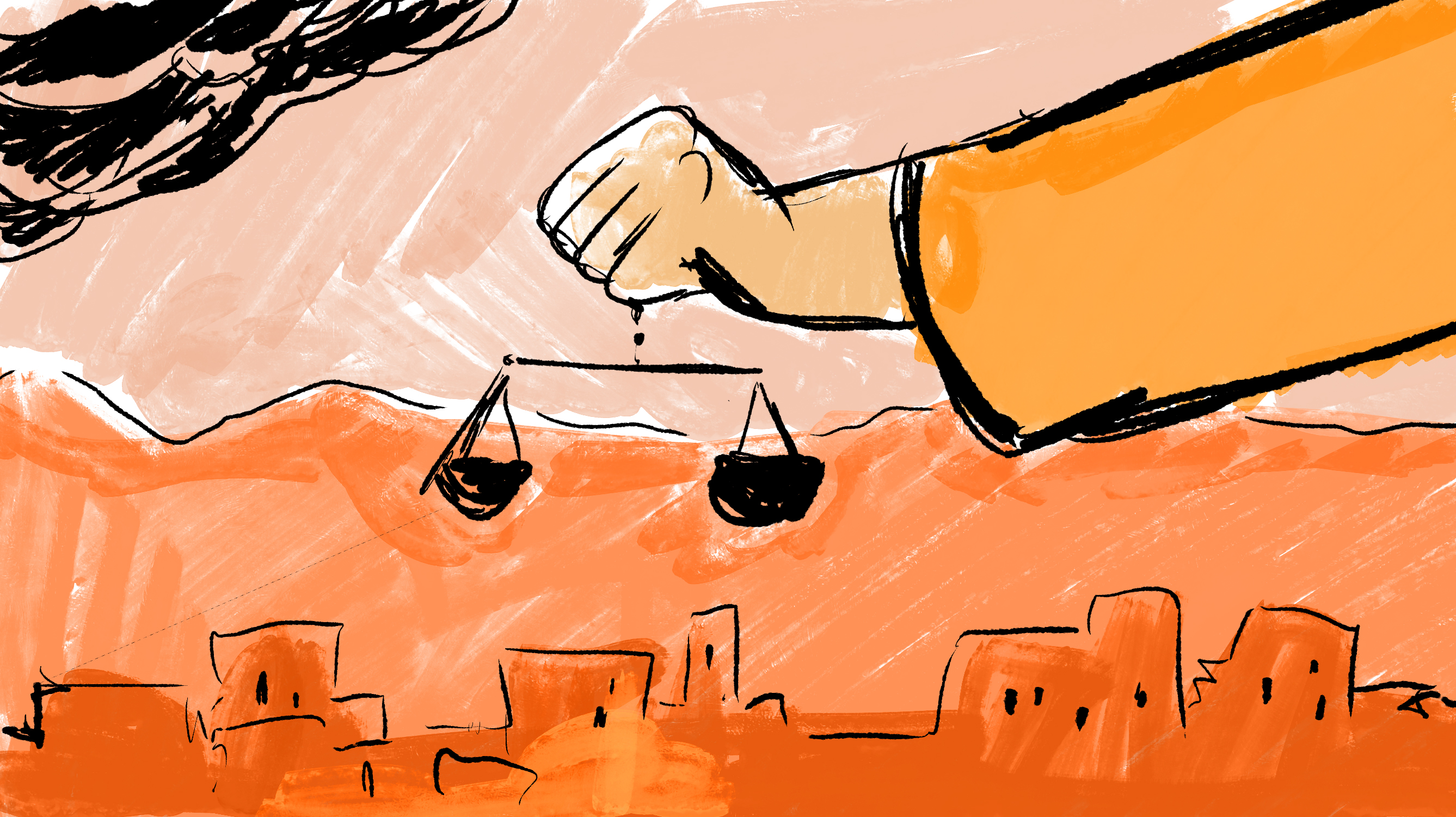
After many long years of waiting, G-d's promise to Avraham was fulfilled, and his son Yitzchak was born. Precisely then, G-d commanded Avraham to take Yitzchak, his beloved son, and offer him as a sacrifice. Avraham, out of absolute faith, was willing to fulfill G-d's word despite the enormous difficulty. At the last moment, G-d stopped the sacrifice (Akeidah) and commanded Avraham not to sacrifice his son. From this story, the following messages can be drawn: the greatness of Avraham's devotion and faith, together with the clarification that G-d does not desire human sacrifice.
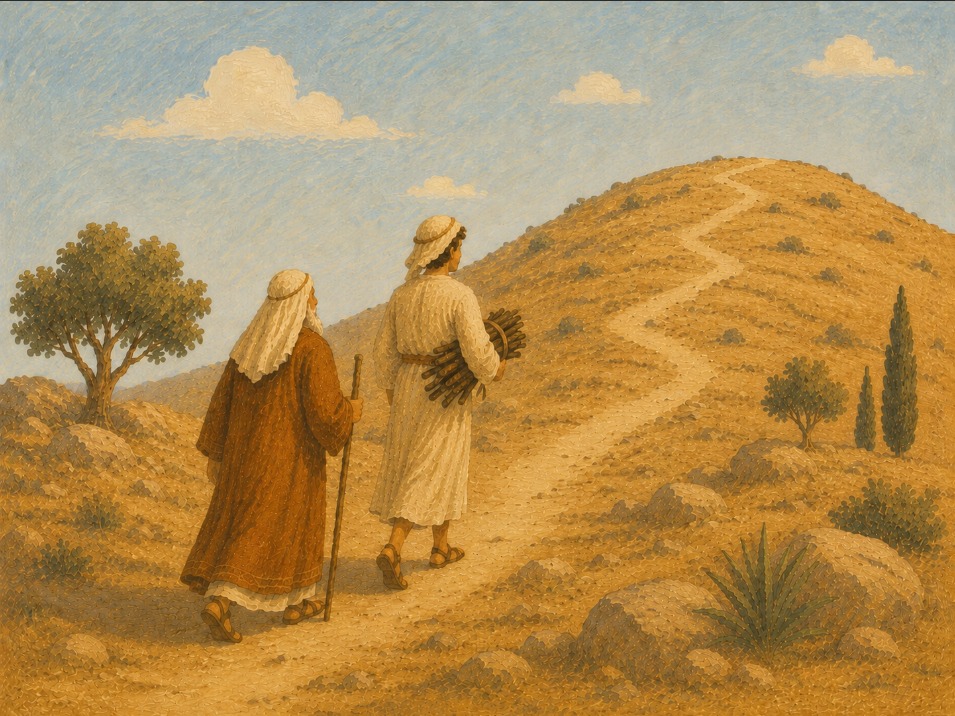
In this unit we will study the story of the sacrifice of Yitzchak (Akedat Yitzchak), one of the most dramatic and moving stories in the Tanakh. The story begins with the words: "And G-d tested Avraham." The test was the hardest of all: to offer up his son. The command is described gradually: "your son, your only one, whom you love, Yitzchak"; the Torah repeatedly emphasizes the deep bond between the father and his son, and the magnitude of the difficulty. Avraham set out at once ("Avraham rose early in the morning"), and for three days walked with Yitzchak toward Mount Moriah. Let's note the doubling of the word "here I am" (hineni). The first time, when G-d addressed Avraham at the beginning of the sacrifice story, Avraham said "here I am." That is, I am here for whatever You tell me. Later, on the way to the sacrifice, when Yitzchak addressed Avraham with a question, he also said to him "here I am, my son," meaning I am here for you. This, of course, highlights the enormous tension Avraham was under. The tension grew as Avraham and Yitzchak drew closer to Mount Moriah. The climactic moment came when Avraham reached out his hand to take the knife and sacrifice his son, and then a call was heard from the heavens: "Do not lay your hand on the boy!" Avraham offered a ram instead of Yitzchak, and the story concluded with G-d's oath to Avraham. (Note that here there is an oath, which is a step up from the promises given previously.) Throughout the study we will focus on two central questions: ● What can be learned from this test of Avraham's? ● And what can be learned from the fact that G-d commanded that the sacrifice be stopped and that Yitzchak not be sacrificed? By addressing this last question, we will come to understand that the Torah opposes the sacrifice of human beings (something that was common among various cultures in ancient times), and teaches that G-d desires life, not death. The central values that emerge from this unit are: ● Faith demands devotion and facing hardship even in difficult situations. ● The Torah presents human conflicts. ● The Torah teaches us the value of the sanctity of life.
El éxodo de Egipto. Mapa con explicaciones● The student will know the sequence of central events in the story of the sacrifice of Yitzchak.
● The student will know central interpretations of our Sages of blessed memory (Chazal) and of the commentators on the story.
● The student will understand the meaning of the fact that G-d stopped the sacrifice and the idea of the sanctity of life.
Debate, chavruta study, Think-Pair-Share
Social and Emotional Learning
• Responsible decision-making: addressing complex decisions in situations of conflict and in matters of faith, responsibility, and morality.
• Social awareness: developing empathy toward the emotional world of Avraham and Yitzchak and understanding human complexity.
• Self-awareness: identifying emotions such as fear, confusion, trust, love, and difficulty in the face of incomprehensible situations.
Context for teaching the unit:
In previous classes we learned about Avraham's long journey: leaving his land, the promises, the hardships, the birth of Yitzchak, and the expulsion of Ishmael. After all this, it seems that Avraham's story reached a positive high point: he has a son who continues him, he has blessing, and there is a clear future.
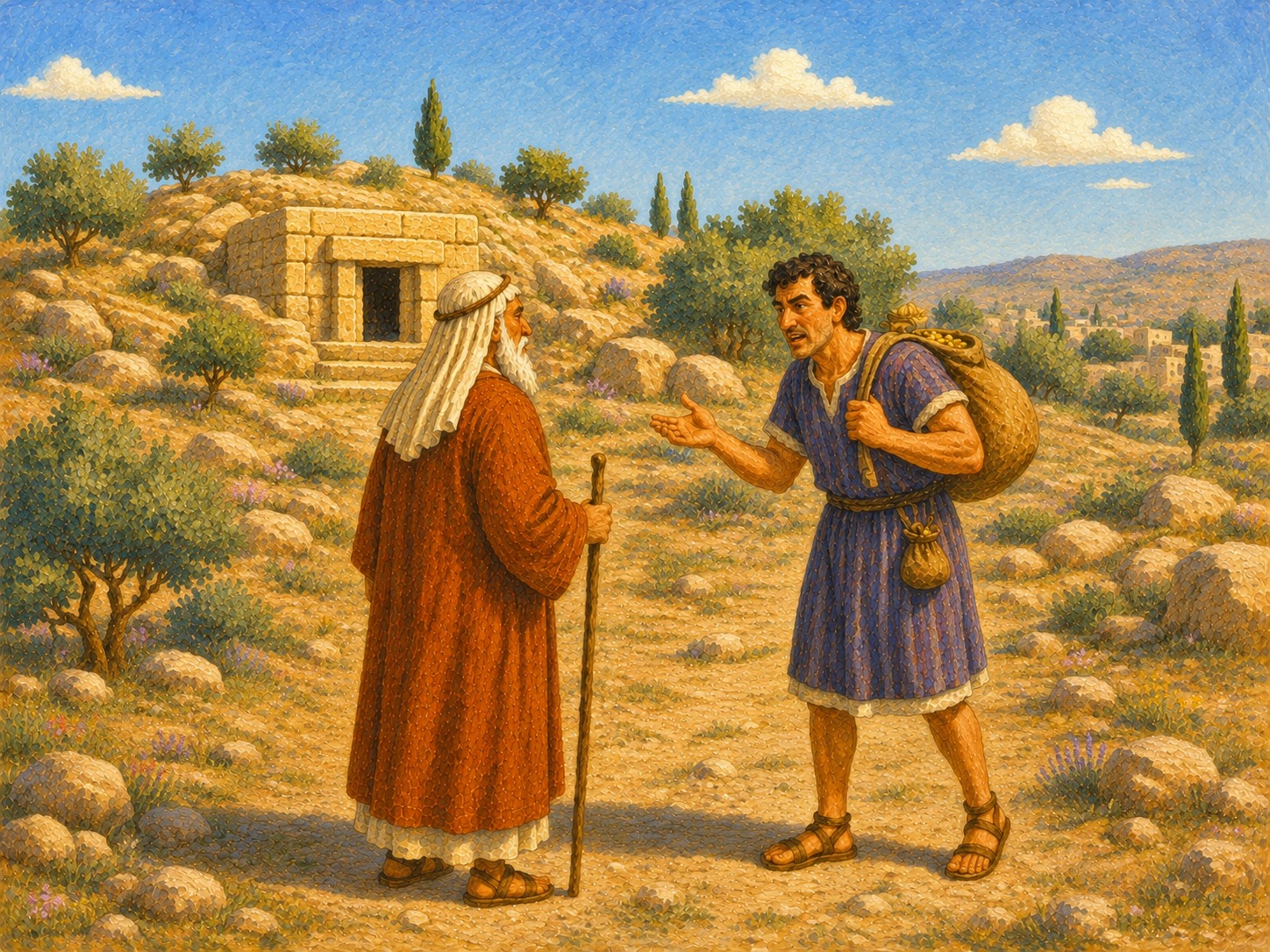
Precisely at this stage, the Torah begins with the words: "And it came to pass after these things that G-d tested Avraham."
The test comes after the promise of offspring has already been fulfilled, and in absolute contradiction to the promise of Yitzchak's continuity: "for it is through Yitzchak that your offspring will be called" — which is why it is especially difficult. Yitzchak is not just a beloved son; he is also the hope for the future and the continuation of Avraham's path.
(Note the recurring expression "lech lecha" [go forth]. We first encounter it at the beginning of the journey of Avraham our father, when he was commanded to leave his past behind, and here the expression "lech lecha" appears when Avraham is required to give up his future.)
At the end of the story, the angel calls on Avraham to stop the sacrifice.
And here the significant message of the sanctity of life is revealed. G-d does not desire sacrifices or death, but holiness within life.
It is important to understand the subject of human sacrifice within the context of the period: in the ancient world there were peoples who sacrificed children to their gods to demonstrate their devotion and faith.
In the book of Jeremiah, when the prophet rebuked the kings of Judah and the inhabitants of Jerusalem toward the end of the First Temple period, he said the following:
"And they have built the high places of Baal, to burn their sons with fire as offerings to Baal, which I did not command, nor did I speak of it, nor did it enter My mind" (Jeremiah Chapter 19, Verse 5).
That is, Jeremiah condemned, in G-d's name, the sacrifice of children to Baal, noting that it never "entered His mind" to burn children in fire. This can also be seen more extensively in the midrash in the Babylonian Talmud, Tractate Taanit 4a. The midrash interprets this verse in light of other examples of human sacrifice that G-d does not desire.
In the angel's words to Avraham: "Do not lay your hand on the boy, and do not do anything to him," the position opposing the sacrifice of human beings is made clear.


"וַיֹּאמֶר אַל תִּשְׁלַח יָדְךָ אֶל הַנַּעַר…
כִּי עַתָּה יָדַעְתִּי כִּי יְרֵא אֱלֹהִים אַתָּה…."
(בראשית כב:יב)
"Do not raise your hand against the boy...
for now I know that you are one who fears G-d...."
(Bereishit Chapter 22, Verse 12)


.png)




.jpg)
.jpg)
.jpg)


.jpg)


